


Newsletters | Request Trial | Log in | Advertise | Digital Issue   |   Search
  • Upstream
  • Midstream & Downstream
  • Gas & LNG
  • Trading & Markets
  • Corporate & Finance
  • Geopolitics
  • Podcasts
Search
Related Articles
Outlook 2026: Building balance – A dual-track strategy in a changing energy landscape
As global energy systems evolve to meet shifting demand and transition pressures, maintaining reliable hydrocarbon supply remains essential to energy security
Russia’s fuel crisis: Difficult but not catastrophic
International and opposition media claim that two-fifths of the country’s refining capacity is offline, but the true situation is not so dire
ADNOC’s Australia avoidance
The Middle East NOC’s decision to exit Santos signals changing rules for Australian gas investors
California refiners dreaming of heyday
US downstream sector in key state feels the pain of high costs, an environmental squeeze and the effects of broader market trends
Mars attacks US oil industry
Crude quality issues are an often understated risk to energy security, highlighted by problems at a key US refinery
Australia gas security faces fitness test
Reassessment of the country’s export-facing gas policy coincides with worsening domestic market backdrop
The death knell for UK energy security
The end of Grangemouth and Lindsey oil refineries marks a worrying trend across Europe amid cost and transition pressures
ADNOC targets Santos in big LNG push
The takeover, if it gets the all-clear from regulators and other government authorities, would propel XRG and its parent firm ADNOC into the top tier of global LNG players
India to help Asia spearhead global refining
Shifting demand patterns leaves most populous nation primed to become downstream leader as China and the West retreat
Australia’s LNG flashpoint
Scapegoating foreign buyers will not solve country’s gas shortages
Refining Australia BP ExxonMobil
Andrew Kemp
Melbourne
22 February 2021
Follow @PetroleumEcon
Forward article link
Share PDF with colleagues

Australia struggles to stop downstream exodus

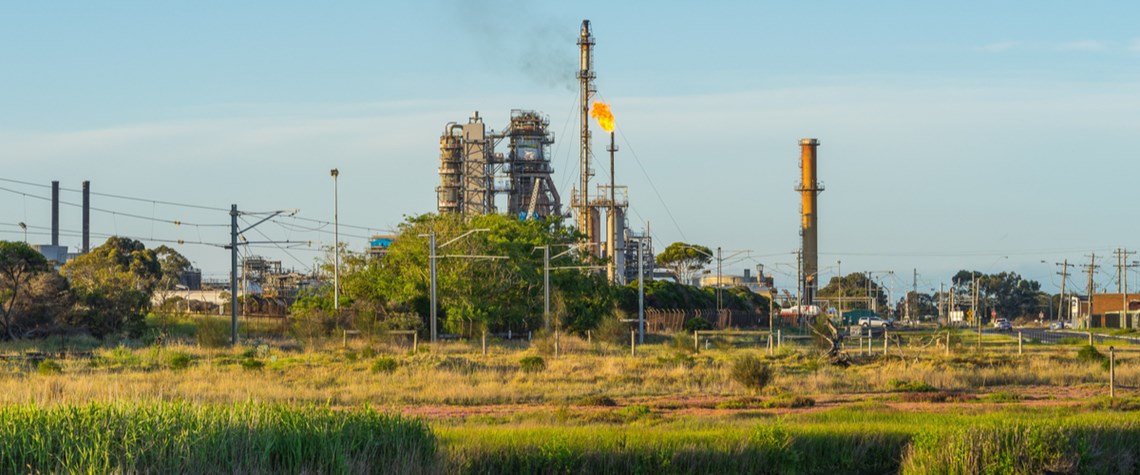
Australia’s energy security takes another hit with ExxonMobil opting to shutter its Victoria refinery

ExxonMobil plans to convert its 90,000bl/d Altona refinery into a fuel import terminal, after concluding it is no longer economically viable. Coming a little over three months after a similar announcement from BP concerning its 138,000bl/d Kwinana refinery in Western Australia, the shutdown will shrink Australia’s refining capacity from 457,000bl/d to just 229,000bl/d by 2022. With the country then having to rely more heavily on regional fuel suppliers to meet demand, there are growing concerns about how the government intends to safeguard its energy supply lines. Lifeline falls short Although the coronavirus pandemic sent the Australian downstream into a tailspin in 2020, refinery operators

Also in this section
Venezuela’s true oil potential
9 January 2026
The Latin American producer’s crude prospects rely on a multi-pronged approach where even the relatively easy wins will take considerable time, effort and cost
Outlook 2026: China’s ‘electrostate’ vision
Outlook 2026
9 January 2026
While many forecasters are reasserting the importance of oil and gas, petrostates should be under no illusion things are changing, and faster than they might think
Southeast Asia’s digital age requires the right energy mix
8 January 2026
Indonesia and Malaysia are at the dawn of breathtaking digital capabilities. Their energy infrastructure must keep up with their ambitions
Outlook 2006: The North Sea’s next chapter – From backbone to blueprint
Outlook 2026
8 January 2026
The next five years will be critical for the North Sea, and it will be policy not geology that will decide the basin’s future

Share PDF with colleagues

COPYRIGHT NOTICE: PDF sharing is permitted internally for Petroleum Economist Gold Members only. Usage of this PDF is restricted by <%= If(IsLoggedIn, User.CompanyName, "")%>’s agreement with Petroleum Economist – exceeding the terms of your licence by forwarding outside of the company or placing on any external network is considered a breach of copyright. Such instances are punishable by fines of up to US$1,500 per infringement
Send

Forward article Link

Send
Sign Up For Our Newsletter
Project Data
Maps
Podcasts
Social Links
Featured Video
Home
  • About us
  • Subscribe
  • Reaching your audience
  • PE Store
  • Terms and conditions
  • Contact us
  • Privacy statement
  • Cookies
  • Sitemap
All material subject to strictly enforced copyright laws © 2025 The Petroleum Economist Ltd
Cookie Settings
;

Search


