


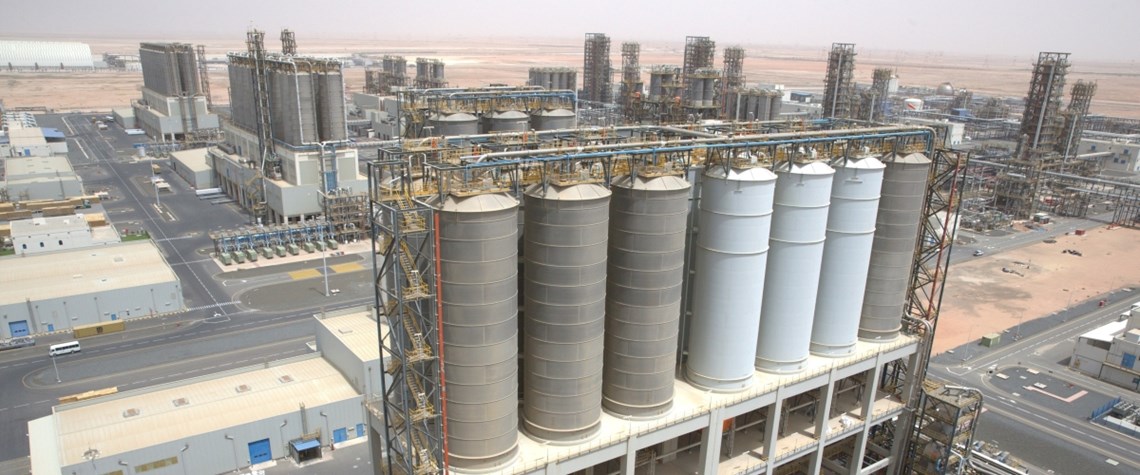
Adnoc's refinery and petrochemicals hub in Ruwais
Adnoc doubles down on petrochemicals
Global decarbonisation pressures notwithstanding, the Emirati giant is determined to extract maximum residual value from its crude oil endowment
The UAE’s state-owned Adnoc unveiled plans to plough $45bn from its bulging coffers into developing the world’s largest refinery and petrochemicals hub at the industrial city of Ruwais as far back as 2018. The Emirati behemoth’s announcement of FID on the $6.2bn Borouge 4 olefins complex at November’s Adipec conference proved it is defiantly maintaining its bullish outlook on oil-derived petchems—despite the oil price gyrations and explosion in consciousness of the need to start moving swiftly to a lower-carbon future. Adnoc’s downstream ambitions are necessarily evolving, but the Borouge scheme, a joint venture (JV) with Austrian chemicals company Borealis—an affiliate of Abu Dhabi’s state

Also in this section
1 April 2026
Golden Pass’s startup offers QatarEnergy a timely boost but may also force a difficult choice between honouring disrupted contracts and capitalising on soaring spot LNG prices
1 April 2026
It is not a case of if or when, but the length and magnitude of economic damage from elevated oil prices
1 April 2026
The US-Iran conflict demonstrates the need for diversification in several senses of the word. It also exposes the limits of Washington applying pressure on major oil and gas producers it considers geopolitical adversaries
31 March 2026
Disappointing results in its bidding round are a reality check for Libya, and global exploration generally



