


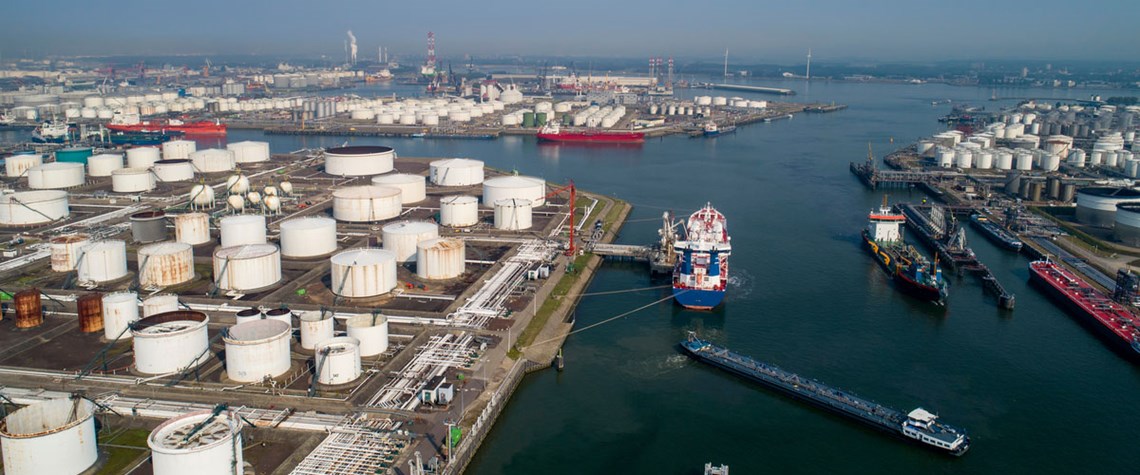
Port of Rotterdam
Letter from Western Europe: Europe’s balancing act
As tragedy continues to unfold in Ukraine, European leaders hasten to balance security, affordability and sustainability in the energy sector
An energy crunch was already underway before war erupted in Eastern Europe. But it took the potential loss of Russian oil and gas to drive home the fragility of Europe’s energy security situation. Western hesitation over strict sanctions on Russian energy is understandable in the context of Europe’s dependence on it. However, we are already halfway down the path to lower Russian oil outflows, and that already heralds higher consumer prices even if the war were to end today. European refineries are fed not only by substantial seaborne shipments of Russian crude, but also directly via a network of large pipelines that run through Ukraine and Belarus to Germany and Central and Eastern Europe. T

Also in this section
1 April 2026
Golden Pass’s startup offers QatarEnergy a timely boost but may also force a difficult choice between honouring disrupted contracts and capitalising on soaring spot LNG prices
1 April 2026
It is not a case of if or when, but the length and magnitude of economic damage from elevated oil prices
1 April 2026
The US-Iran conflict demonstrates the need for diversification in several senses of the word. It also exposes the limits of Washington applying pressure on major oil and gas producers it considers geopolitical adversaries
31 March 2026
Disappointing results in its bidding round are a reality check for Libya, and global exploration generally



