


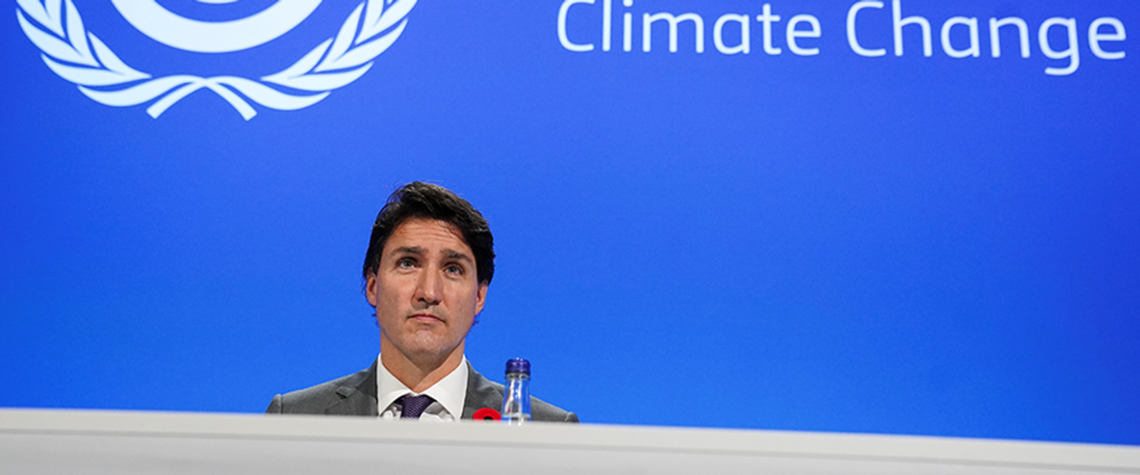
Canadian prime minister Justin Trudeau at Cop26
Letter from Canada: Emission caps threaten output
Canada’s lack of progress in meeting ambitious emission reduction goals is a particular threat to the country’s upstream oil and gas sector
Canadian prime minister Justin Trudeau’s government has increased its national greenhouse gas emission reduction target for 2030 to between 40pc and 45pc of 2005 levels, up from 30pc previously. But the country managed to cut emissions by a mere 9mn t CO₂ equivalent, or 1pc, through 2019, based on its latest submission to the UN Framework Convention on Climate Change. Assuming the federal government stands firm on its national target, the biggest loser could be the country’s oil and gas sector. Its emissions have increased by a fifth, to 191mn t, since 2005—on the back of a near two-and-a-half times jump in emissions from the oil sands, despite a significant improvement in emissions intensit

Also in this section
1 April 2026
Golden Pass’s startup offers QatarEnergy a timely boost but may also force a difficult choice between honouring disrupted contracts and capitalising on soaring spot LNG prices
1 April 2026
It is not a case of if or when, but the length and magnitude of economic damage from elevated oil prices
1 April 2026
The US-Iran conflict demonstrates the need for diversification in several senses of the word. It also exposes the limits of Washington applying pressure on major oil and gas producers it considers geopolitical adversaries
31 March 2026
Disappointing results in its bidding round are a reality check for Libya, and global exploration generally



