


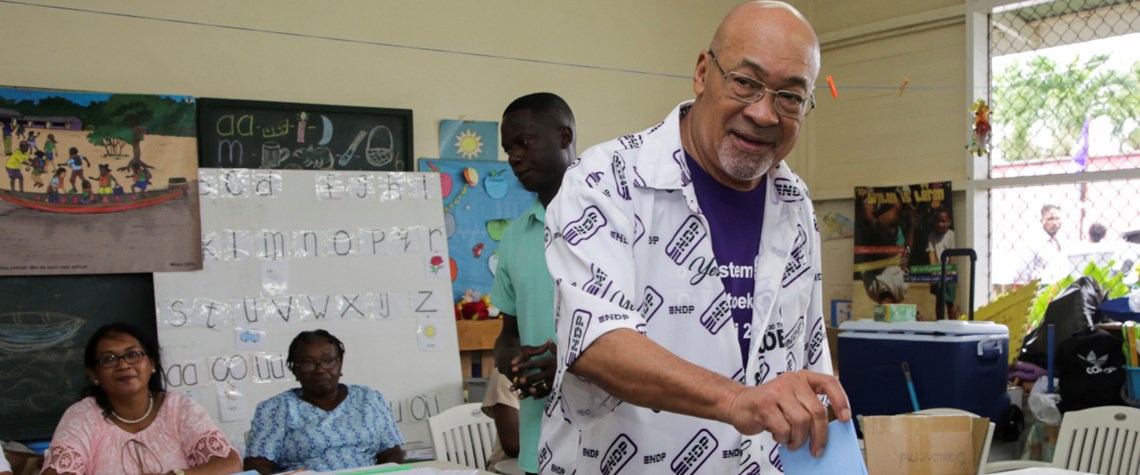
Suriname's president, Desi Bouterse
Suriname’s election setback
Development of the country’s oil sector faces a slowdown in the face of political instability and dire economic conditions
National elections in Suriname were supposed to bring much-needed stability to the country following a string of political scandals and an economy poised to suffer significant recession. The landmark offshore oil discoveries announced by French operator Total in the first quarter offered a rare reprieve from the sense of gloom. But the fallout from the election has highlighted Suriname’s fractious political scene and the potential risks of investing in the country. President Desi Bouterse, who was standing for a third term in office, demanded a recount ahead of the official result, and international observers fear a lengthy dispute. “The risk of political violence and civil unrest is c

Also in this section
1 April 2026
Golden Pass’s startup offers QatarEnergy a timely boost but may also force a difficult choice between honouring disrupted contracts and capitalising on soaring spot LNG prices
1 April 2026
It is not a case of if or when, but the length and magnitude of economic damage from elevated oil prices
1 April 2026
The US-Iran conflict demonstrates the need for diversification in several senses of the word. It also exposes the limits of Washington applying pressure on major oil and gas producers it considers geopolitical adversaries
31 March 2026
Disappointing results in its bidding round are a reality check for Libya, and global exploration generally



