


Newsletters | Request Trial | Log in | Advertise | Digital Issue   |   Search
  • Upstream
  • Midstream & Downstream
  • Gas & LNG
  • Trading & Markets
  • Corporate & Finance
  • Geopolitics
  • Podcasts
Search
Related Articles
Letter from London: Oil’s golden triangle
The interplay between OPEC+, China and the US will define oil markets throughout 2026
The curious case of oil-on-water
The market is facing being drowned in excess crude, but one caveat is that a large chunk is due to buyers reluctant to snap up sanctioned barrels
China’s oil plan comes together
The country’s rapid output growth is an example that other producers could learn from
China seizes oil security opportunity
A combination of geopolitical uncertainty and OPEC+ barrels has driven a renewed focus on building strategic oil stocks despite flagging demand
Arctic LNG comes in from the cold
Beijing now appears prepared to accept discounted Russian LNG, even at the cost of heightened sanctions risk
China’s role as oil buffer stock manager
The country’s intervention in global oil markets to stabilise prices could last well into 2026
Power of Siberia 2: Deal or no deal?
There is a good strategic case for China to sign a deal for gas supplies via the proposed Power of Siberia 2 pipeline, but Beijing’s concerns around over-dependence on a single supplier and desire to drive down the price make it relatively unlikely a contract will be finalised this year
China creates two-tier oil dynamic
There is a bifurcation in the global oil market as China’s stockpiling contrasts with reduced inventories elsewhere
China’s oil output to scale new heights
New discoveries and stabilisation of legacy fields’ output have helped China reverse the decline and be a top-five producer in recent years
India to help Asia spearhead global refining
Shifting demand patterns leaves most populous nation primed to become downstream leader as China and the West retreat
China Tight oil Shale
David Whitehouse
18 November 2019
Follow @PetroleumEcon
Forward article link
Share PDF with colleagues

Data revolution before shale revolution

China needs to replicate the US approach of making more data available before it can hope for game-changing shale production growth

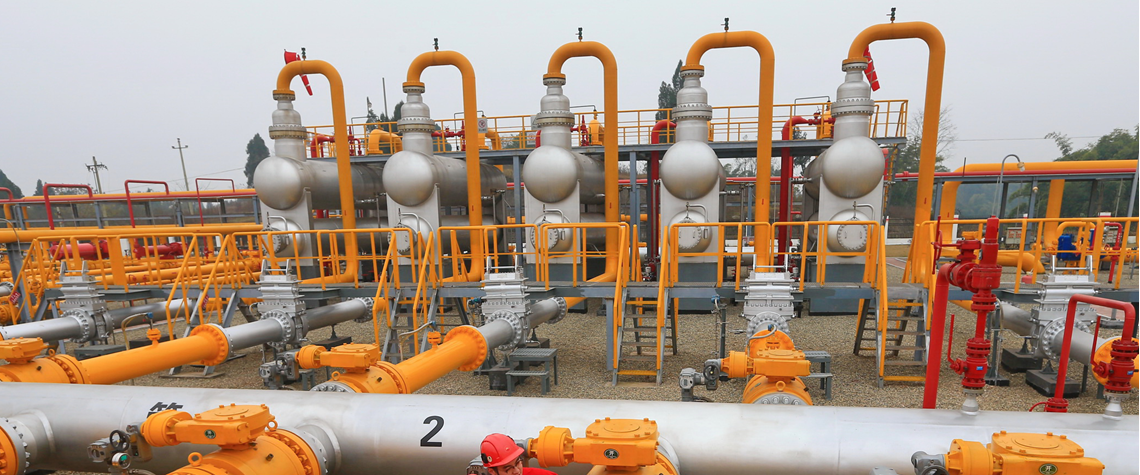
A September shale gas discovery by the PetroChina arm of China ‘big three’ oil firm CNPC, in the Sichuan basin, has been hailed as a breakthrough because of the shallower-than-usual depth at which it was made. But it will make little difference to China’s likelihood of hugely undershooting its 2020 shale gas production target.  Beijing remains hopeful that funding shale gas exploration will help reduce China’s growing reliance on gas imports, as part of a wider growing concern over the country’s energy security in the wake of geo-political tensions with the US and its significant Asian naval strength. But analysts argue that root-and-branch reform of the structure of the Chinese gas industry

Also in this section
Cheniere’s disciplined expansion
19 February 2026
US LNG exporter Cheniere Energy has grown its business rapidly since exporting its first cargo a decade ago. But Chief Commercial Officer Anatol Feygin tells Petroleum Economist that, as in the past, the company’s future expansion plans are anchored by high levels of contracted offtake, supporting predictable returns on investment
The new LNG wave is finally here
19 February 2026
Growth in LNG supply will surpass the rise in demand in 2026 for the first time in years, according to Mike Fulwood, senior research fellow at the OIES, but lower prices are likely to encourage fuel switching and could create more demand on a permanent basis
LNG trends in developing economies
19 February 2026
Awais Ali Butt, manager for sales and business development at Pakistan LNG Ltd, discusses LNG’s role in energy security across developing, price-sensitive economies, as well as examining trade-offs between buying strategies and the impact of lower prices and policy on import behaviour 
LNG remains frontrunner among low-carbon marine fuels
19 February 2026
LNG’s technical maturity, availability and price, as well as regulation, have driven its rapid adoption as a marine fuel, yet its future in shipping will depend on transition policies and progress in cutting methane emissions and scaling bio- and synthetic LNG, according to Carlos Guerrero at Bureau Veritas

Share PDF with colleagues

COPYRIGHT NOTICE: PDF sharing is permitted internally for Petroleum Economist Gold Members only. Usage of this PDF is restricted by <%= If(IsLoggedIn, User.CompanyName, "")%>’s agreement with Petroleum Economist – exceeding the terms of your licence by forwarding outside of the company or placing on any external network is considered a breach of copyright. Such instances are punishable by fines of up to US$1,500 per infringement
Send

Forward article Link

Send
Sign Up For Our Newsletter
Project Data
Maps
Podcasts
Social Links
Featured Video
Home
  • About us
  • Subscribe
  • Reaching your audience
  • PE Store
  • Terms and conditions
  • Contact us
  • Privacy statement
  • Cookies
  • Sitemap
All material subject to strictly enforced copyright laws © 2025 The Petroleum Economist Ltd
Cookie Settings
;

Search


