


Newsletters | Request Trial | Log in | Advertise | Digital Issue   |   Search
  • Upstream
  • Midstream & Downstream
  • Gas & LNG
  • Trading & Markets
  • Corporate & Finance
  • Geopolitics
  • Podcasts
Search
Related Articles
Outlook 2026: How critical mineral partnerships are shaping ASEAN’s energy transition
The global race for critical minerals has become a defining feature of energy geopolitics, presenting the ASEAN region with both opportunity and risk
Oil and gas now has green licence
The hydrocarbons industry must start to deliver in 2024 on the quiet approvals granted at last year’s COP, which was also dubbed ‘Conference of the Petrostates’
Outlook 2023: Our industry is ideally placed to address the energy trilemma
Lowering the carbon intensity of oil and gas production will be a key consideration in the years to come
Cash-rich oil and gas sector eyes next investments
The industry might be poised to spend significant sums on low-carbon projects
Adnoc aims to benefit from European IOCs’ new impetus
Appetite to replace Russian energy imports is providing a major fillip to the Emirati firm’s upstream development plans
TotalEnergies targets 2027 startup for Papua LNG
Close collaboration between IOCs in Papua New Guinea means other developments may follow
Southeast Asian nations poised for crucial decade
Future development prospects are mixed across the energy-hungry region
High profits double-edged sword for oil sands producers
Overflowing coffers are likely to impress shareholders but not politicians being asked for decarbonisation subsidies
Southeast Asia counting on carbon capture
The region’s shift from coal- to gas-fired generation will require additional strategies to meet ambitious carbon targets
Letter from Australia: Labor victory positive for CCS
Australia’s upstream industry could be poised to benefit from the election of a Labor government for the first time in almost a decade
Philippines Carbon capture Low carbon energy markets
Sally Bogle
1 June 2018
Follow @PetroleumEcon
Forward article link
Share PDF with colleagues

Philippines takes carbon emitters to task

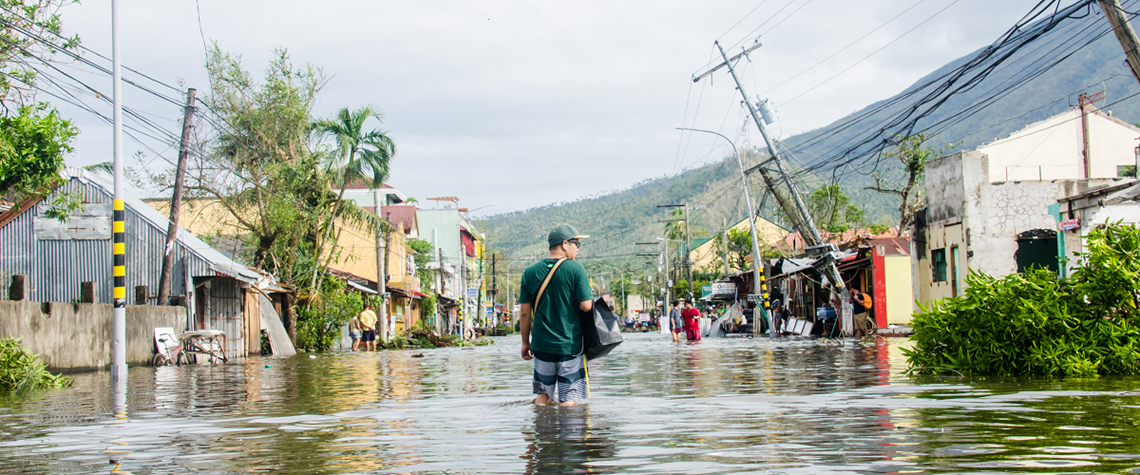
The Southeast Asian nation has launched the world’s first governmental inquiry into the impact of climate change on human rights

Chevron, ExxonMobil, BP, Shell, ConocoPhillips and 45 other major oil and gas producers have been summoned to appear before a year-long inquiry led by the Commission on Human Rights (CHR) in the Philippines. The aim is to investigate the role of large carbon emitters in causing climate change. The investigation was launched in 2015, following a group petition from Greenpeace and others which alleged that 50 so-called "carbon majors" have contributed to climate change and impacted the rights of the citizens of this low-lying island nation. After two years of fact-finding missions, the CHR held its first formal hearing in Quezon City in late March. Subsequent hearings are due to take place in

Also in this section
OPEC+ set to strengthen its hand
28 January 2026
The alliance looks to bolster market management credibility by bringing greater clarity and unity to output cuts and producer capacity later in 2026
Indian refiners prove their adaptability
23 January 2026
A strategic pivot away from Russian crude in recent weeks tees up the possibility of improved US-India trade relations
Gas deal keeps Lebanon’s offshore hopes alive
23 January 2026
The signing of a deal with a TotalEnergies-led consortium to explore for gas in a block adjoining Israel’s maritime area may breathe new life into the country’s gas ambitions
Letter from Saudi Arabia: Big oil meets big shovel
Opinion
22 January 2026
As Saudi Arabia pushes mining as a new pillar of its economy, Saudi Aramco is positioning itself at the intersection of hydrocarbons, minerals and industrial policy

Share PDF with colleagues

COPYRIGHT NOTICE: PDF sharing is permitted internally for Petroleum Economist Gold Members only. Usage of this PDF is restricted by <%= If(IsLoggedIn, User.CompanyName, "")%>’s agreement with Petroleum Economist – exceeding the terms of your licence by forwarding outside of the company or placing on any external network is considered a breach of copyright. Such instances are punishable by fines of up to US$1,500 per infringement
Send

Forward article Link

Send
Sign Up For Our Newsletter
Project Data
Maps
Podcasts
Social Links
Featured Video
Home
  • About us
  • Subscribe
  • Reaching your audience
  • PE Store
  • Terms and conditions
  • Contact us
  • Privacy statement
  • Cookies
  • Sitemap
All material subject to strictly enforced copyright laws © 2025 The Petroleum Economist Ltd
Cookie Settings
;

Search


