


Newsletters | Request Trial | Log in | Advertise | Digital Issue   |   Search
  • Upstream
  • Midstream & Downstream
  • Gas & LNG
  • Trading & Markets
  • Corporate & Finance
  • Geopolitics
  • Podcasts
Search
Related Articles
China’s new oil position
OPEC, upstream investors and refiners all face strategic shifts now the Asian behemoth is no longer the main engine of global oil demand growth
Explainer: Inside China’s crude oil stockpiling black box
Energy security continues to evolve as a strategic priority amid growing geopolitical tensions highlighted by increased volumes, a new energy law and persistent secrecy
Southeast Asia’s digital age requires the right energy mix
Indonesia and Malaysia are at the dawn of breathtaking digital capabilities. Their energy infrastructure must keep up with their ambitions
Outlook 2026: How critical mineral partnerships are shaping ASEAN’s energy transition
The global race for critical minerals has become a defining feature of energy geopolitics, presenting the ASEAN region with both opportunity and risk
Letter from London: Oil’s golden triangle
The interplay between OPEC+, China and the US will define oil markets throughout 2026
The curious case of oil-on-water
The market is facing being drowned in excess crude, but one caveat is that a large chunk is due to buyers reluctant to snap up sanctioned barrels
China’s oil plan comes together
The country’s rapid output growth is an example that other producers could learn from
China seizes oil security opportunity
A combination of geopolitical uncertainty and OPEC+ barrels has driven a renewed focus on building strategic oil stocks despite flagging demand
Arctic LNG comes in from the cold
Beijing now appears prepared to accept discounted Russian LNG, even at the cost of heightened sanctions risk
China’s role as oil buffer stock manager
The country’s intervention in global oil markets to stabilise prices could last well into 2026
Malaysia China
Selwyn Parker
8 November 2018
Follow @PetroleumEcon
Forward article link
Share PDF with colleagues

Malaysia rebuttal reflects mistrust of China's 'Belt and Road' plan

Is Malaysia’s repudiation of China’s “unequal treaties” a sign of things to come?

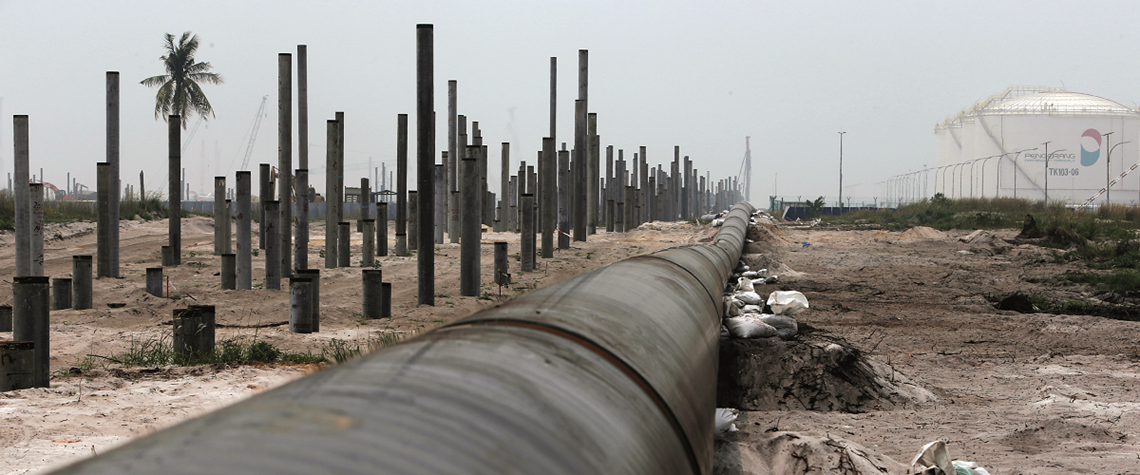
Malaysia's abrupt cancellation of $3bn worth of China-backed pipeline projects represents probably the biggest knockback so far for President Xi Jinping's Belt and Road initiative. This initiative has been bankrolling large-scale energy projects right across the region. Work on the pipelines was suspended in July, but the cancellations were announced in early September. They involve two oil and gas pipelines in mainland Malaysia and Borneo, and another linking the state of Malacca to a Petronas facility in Johor. The contracts had been signed under former prime minister Najib Razak, who is facing trial next year over corruption allegations. The new Malaysian government's show of independence

Also in this section
Trump’s bid to reshape the global energy order
10 March 2026
From Venezuela to Hormuz, the US—backed by the most powerful military force ever assembled—is redrawing not only oil and gas flows but also the global balance of energy power
The diesel crisis
10 March 2026
By shutting the Strait of Hormuz, Iran has cut exports of distillate-rich Middle Eastern crude, jet fuel and diesel, and is holding the energy market hostage
Navigating the next LNG cycle
10 March 2026
Eni’s director for global gas and LNG portfolio, Cristian Signoretto, discusses how demand will respond to rising LNG supply, and how the company is expanding its own gas and LNG operations through disciplined, capital-efficient investments
OPEC+ boosted production before crisis
9 March 2026
Petroleum Economist analysis sees increases in output from Saudi Arabia, Venezuela and Kazakhstan among others before region’s murky descent

Share PDF with colleagues

COPYRIGHT NOTICE: PDF sharing is permitted internally for Petroleum Economist Gold Members only. Usage of this PDF is restricted by <%= If(IsLoggedIn, User.CompanyName, "")%>’s agreement with Petroleum Economist – exceeding the terms of your licence by forwarding outside of the company or placing on any external network is considered a breach of copyright. Such instances are punishable by fines of up to US$1,500 per infringement
Send

Forward article Link

Send
Sign Up For Our Newsletter
Project Data
Maps
Podcasts
Social Links
Featured Video
Home
  • About us
  • Subscribe
  • Reaching your audience
  • PE Store
  • Terms and conditions
  • Contact us
  • Privacy statement
  • Cookies
  • Sitemap
All material subject to strictly enforced copyright laws © 2025 The Petroleum Economist Ltd
Cookie Settings
;

Search


