


Newsletters | Request Trial | Log in | Advertise | Digital Issue   |   Search
  • Upstream
  • Midstream & Downstream
  • Gas & LNG
  • Trading & Markets
  • Corporate & Finance
  • Geopolitics
  • Podcasts
Search
Related Articles
Kazakhstan struggles with energy balance
The Central Asian country is positioning itself as a low-carbon leader, but antiquated infrastructure and a dependence on Russia are holding it back
Hydrocarbon Processing Refining Databook 2025: Europe, Russia & CIS
EU net-zero polices have shifted refining investment among member states, while across the region countries and companies continue to adjust to changes in trade flows caused by the war in Ukraine
Kazakhstan’s Tengiz growth tests OPEC+ limits
The oilfield expansion provides a fresh influx of revenue but will strain its cooperation with OPEC+ and fails to mask deeper issues with the economy and investors
Kazakhstan’s upstream feels the strain
Flat oil growth in 2024 highlights mounting industry problems
Russia makes gas inroads in Central Asia
Uzbekistan and Kazakhstan provide opportunities after Europe turns it back, while also offering another gateway to China
Kazakhstan is key to the Middle Corridor
The race to go around Russia is on and the New Silk Road has a Central Asian energy flavour
Eni makes strategic gamble with Libya gas project
Despite previous security concerns, Eni enters JV with Libya's NOC for major hydrocarbons development
Eni greenlights second Congolese LNG project
Rapid-deployment floating developments are a burgeoning part of the sector
International firms compete for Uruguayan blocks
The country’s frontier upstream continues to attract interest
Mozambique upstream progress defies unrest
The east African country continues to attract investment in oil and gas projects, but concerns over security are still impeding developments in the gas-rich north
Kazakhstan Shell Eni
Selwyn Parker
4 July 2018
Follow @PetroleumEcon
Forward article link
Share PDF with colleagues

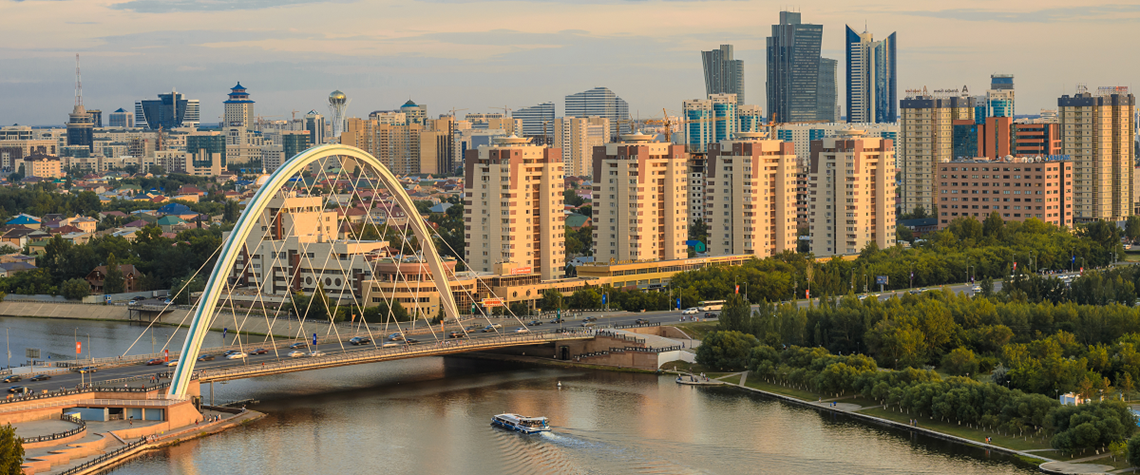
Kazakhstan wakes to hydrocarbon promise

After years of foot-dragging and energy policy flip-flopping, Kazakhstan is putting its oil and gas aspirations back on track

A series of actions and agreements coming to fruition in the months ahead promise to make 2018 a turnaround year for Kazakhstan. However, the former Soviet nation still suffers from a dearth of greenfield projects and the government will have to maintain the current momentum if it wants to meet its goals. The country possesses ample hydrocarbon reserves, estimated by the Kazakh Ministry of Oil and Gas at 35bn barrels of oil (4.8bn tonnes). But they're predominantly located in three mega-fields—Kashagan, Tengiz and Karachaganak—that produce more than half of the national output. Because the Astana government has bet the country's future on oil exports, it urgently needs to find new reserves.

Also in this section
Learning from oil’s supercycle miss
5 December 2025
Mistaken assumptions around an oil bull run that never happened are a warning over the talk of a supply glut
Explainer: What do Russia’s oil giants own overseas?
4 December 2025
Time is running out for Lukoil and Rosneft to divest international assets that will be mostly rendered useless to them when the US sanctions deadline arrives in mid-December
Letter from Saudi Arabia: US-Saudi energy ties enter a new phase
Opinion
3 December 2025
Aramco’s pursuit of $30b in US gas partnerships marks a strategic pivot. The US gains capital and certainty; Saudi Arabia gains access, flexibility and a new export future
Letter from London: Oil’s golden triangle
Opinion
2 December 2025
The interplay between OPEC+, China and the US will define oil markets throughout 2026

Share PDF with colleagues

COPYRIGHT NOTICE: PDF sharing is permitted internally for Petroleum Economist Gold Members only. Usage of this PDF is restricted by <%= If(IsLoggedIn, User.CompanyName, "")%>’s agreement with Petroleum Economist – exceeding the terms of your licence by forwarding outside of the company or placing on any external network is considered a breach of copyright. Such instances are punishable by fines of up to US$1,500 per infringement
Send

Forward article Link

Send
Sign Up For Our Newsletter
Project Data
Maps
Podcasts
Social Links
Featured Video
Home
  • About us
  • Subscribe
  • Reaching your audience
  • PE Store
  • Terms and conditions
  • Contact us
  • Privacy statement
  • Cookies
  • Sitemap
All material subject to strictly enforced copyright laws © 2025 The Petroleum Economist Ltd
Cookie Settings
;

Search


