


Newsletters | Request Trial | Log in | Advertise | Digital Issue   |   Search
  • Upstream
  • Midstream & Downstream
  • Gas & LNG
  • Trading & Markets
  • Corporate & Finance
  • Geopolitics
  • Podcasts
Search
Related Articles
Outlook 2026: How critical mineral partnerships are shaping ASEAN’s energy transition
The global race for critical minerals has become a defining feature of energy geopolitics, presenting the ASEAN region with both opportunity and risk
Letter from London: Oil’s golden triangle
The interplay between OPEC+, China and the US will define oil markets throughout 2026
The curious case of oil-on-water
The market is facing being drowned in excess crude, but one caveat is that a large chunk is due to buyers reluctant to snap up sanctioned barrels
China’s oil plan comes together
The country’s rapid output growth is an example that other producers could learn from
China seizes oil security opportunity
A combination of geopolitical uncertainty and OPEC+ barrels has driven a renewed focus on building strategic oil stocks despite flagging demand
Arctic LNG comes in from the cold
Beijing now appears prepared to accept discounted Russian LNG, even at the cost of heightened sanctions risk
China’s role as oil buffer stock manager
The country’s intervention in global oil markets to stabilise prices could last well into 2026
India’s Nayara fallout
The EU’s Russia sanctions could have far-reaching implications for India’s Vadinar-based refinery
Power of Siberia 2: Deal or no deal?
There is a good strategic case for China to sign a deal for gas supplies via the proposed Power of Siberia 2 pipeline, but Beijing’s concerns around over-dependence on a single supplier and desire to drive down the price make it relatively unlikely a contract will be finalised this year
China creates two-tier oil dynamic
There is a bifurcation in the global oil market as China’s stockpiling contrasts with reduced inventories elsewhere
China Philippines Vietnam Rosneft Repsol
James Gavin
London
20 July 2018
Follow @PetroleumEcon
Forward article link
Share PDF with colleagues

IOCs face choppy South China Sea conditions

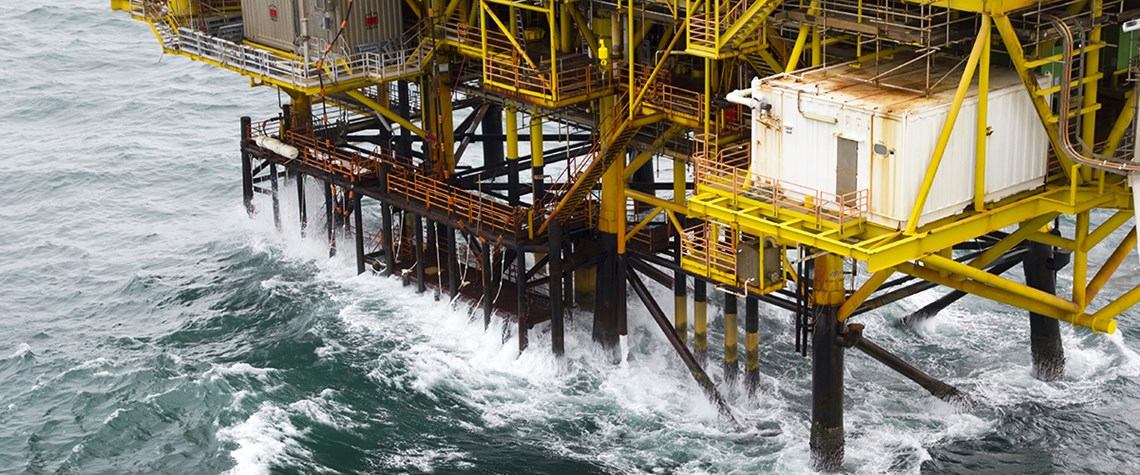
Beijing's determination to exert its influence in the South China Sea is causing problems for oil companies active in the region

An increasingly assertive foreign policy over maritime rights claims is bringing China into conflict with its neighbours. In March of this year, Spain's Repsol was forced to suspend drilling in the Red Emperor block, a $200m oil and gas development off Vietnam's southeast coast, after state-owned PetroVietnam—under Chinese pressure—requested a halt to activities. That prompted Repsol to lodge a compensation claim for the suspension of drilling on a field where it has been active since 2009, and which contains 45m barrels of crude oil and 172bn cubic feet of natural gas. China's resurgent maritime nationalism is focused on the so-called nine-dash line, the resource-rich U-shaped stretch of wa

Also in this section
Venezuela’s true oil potential
9 January 2026
The Latin American producer’s crude prospects rely on a multi-pronged approach where even the relatively easy wins will take considerable time, effort and cost
Outlook 2026: China’s ‘electrostate’ vision
Outlook 2026
9 January 2026
While many forecasters are reasserting the importance of oil and gas, petrostates should be under no illusion things are changing, and faster than they might think
Southeast Asia’s digital age requires the right energy mix
8 January 2026
Indonesia and Malaysia are at the dawn of breathtaking digital capabilities. Their energy infrastructure must keep up with their ambitions
Outlook 2006: The North Sea’s next chapter – From backbone to blueprint
Outlook 2026
8 January 2026
The next five years will be critical for the North Sea, and it will be policy not geology that will decide the basin’s future

Share PDF with colleagues

COPYRIGHT NOTICE: PDF sharing is permitted internally for Petroleum Economist Gold Members only. Usage of this PDF is restricted by <%= If(IsLoggedIn, User.CompanyName, "")%>’s agreement with Petroleum Economist – exceeding the terms of your licence by forwarding outside of the company or placing on any external network is considered a breach of copyright. Such instances are punishable by fines of up to US$1,500 per infringement
Send

Forward article Link

Send
Sign Up For Our Newsletter
Project Data
Maps
Podcasts
Social Links
Featured Video
Home
  • About us
  • Subscribe
  • Reaching your audience
  • PE Store
  • Terms and conditions
  • Contact us
  • Privacy statement
  • Cookies
  • Sitemap
All material subject to strictly enforced copyright laws © 2025 The Petroleum Economist Ltd
Cookie Settings
;

Search


