


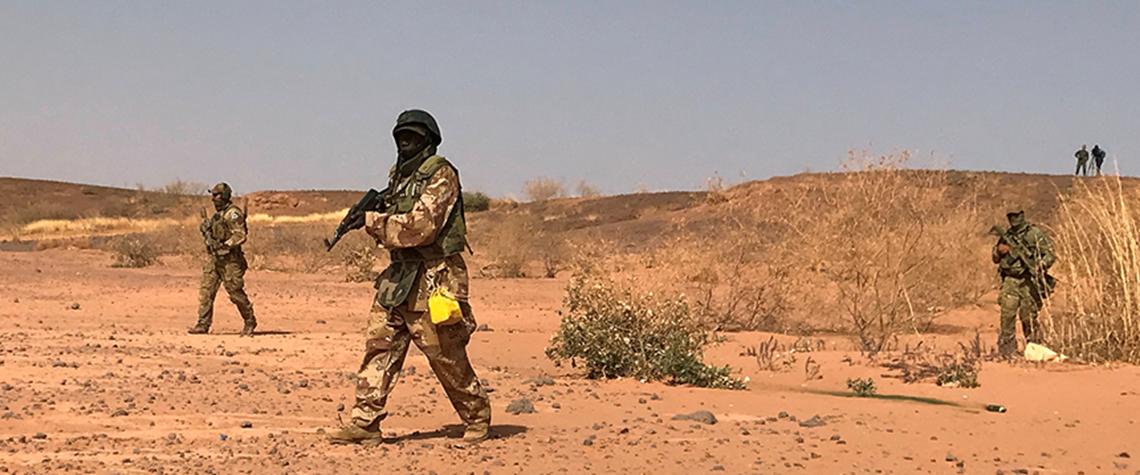
Nigerien commandos simulate a raid on a militant camp
Revived Sahara pipeline still faces hurdles
Nigeria, Niger and Algeria are committed to the $13bn gas connection, but financial and security obstacles will be hard to overcome
The idea of a pipeline across the Sahara delivering Nigerian gas to Europe was first proposed in the 1970s. In the wake of Russia’s invasion of Ukraine, however, the concept has regained momentum. Ministers from Nigeria, Niger and Algeria have met three times this year to discuss the plan, and on 28 July they signed an agreement in Algiers to take the project forward. The Trans-Saharan Gas Pipeline (TSGP) would extend an under-construction route from southern to northern Nigeria. The TSGP would run for more than 4,000km, carrying up to 30bn m³/yr of Nigerian gas through Niger to connect with the existing Algerian pipelines that convey the fuel across the Mediterranean. “What has held b

Also in this section
1 April 2026
Golden Pass’s startup offers QatarEnergy a timely boost but may also force a difficult choice between honouring disrupted contracts and capitalising on soaring spot LNG prices
1 April 2026
It is not a case of if or when, but the length and magnitude of economic damage from elevated oil prices
1 April 2026
The US-Iran conflict demonstrates the need for diversification in several senses of the word. It also exposes the limits of Washington applying pressure on major oil and gas producers it considers geopolitical adversaries
31 March 2026
Disappointing results in its bidding round are a reality check for Libya, and global exploration generally



