


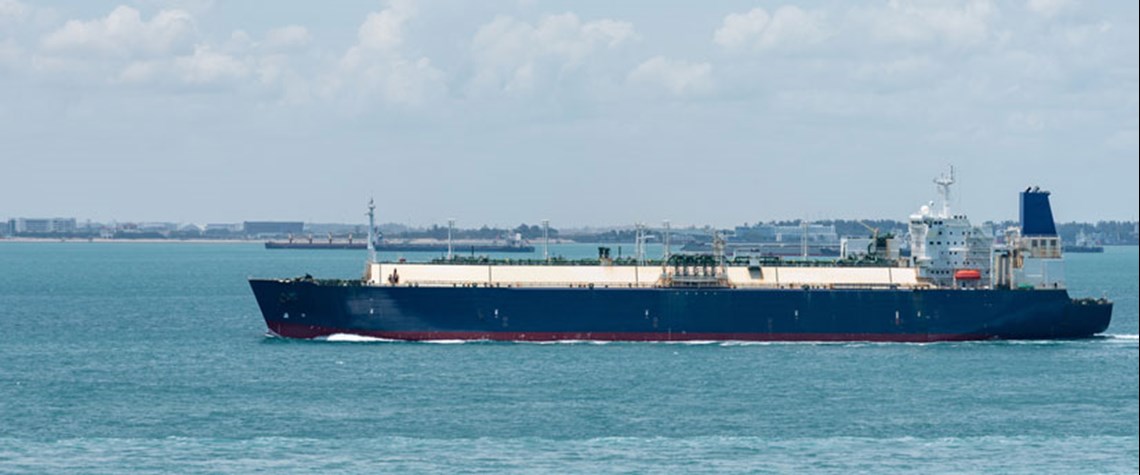
An LNG tanker arriving in Singapore
Liquids give Qatar LNG negative breakeven – Rystad
Existing Ras Laffan trains could cover costs even if LNG prices went to zero
State-owned Mid-East Gulf gas behemoth Qatar Petroleum’s Qatargas 1 Train 1 has an estimated variable cost of LNG production of just $1.60/mn Btu, according to analysis by consultancy Rystad Energy. But, if pre-tax liquids revenue from associated liquids production is considered, it calculates these costs are offset by oil revenues of c.$2.60/mn Btu. And that brings net costs down to -$1/mn Btu. Qatari production is therefore in the money even if LNG prices moved to zero or even into slightly negative territory. In an increasingly flexible global market, such a scenario is unlikely. But the UK NBP gas market, for example, has briefly experienced negative pricing previously, when North Sea as

Also in this section
1 April 2026
Golden Pass’s startup offers QatarEnergy a timely boost but may also force a difficult choice between honouring disrupted contracts and capitalising on soaring spot LNG prices
1 April 2026
It is not a case of if or when, but the length and magnitude of economic damage from elevated oil prices
1 April 2026
The US-Iran conflict demonstrates the need for diversification in several senses of the word. It also exposes the limits of Washington applying pressure on major oil and gas producers it considers geopolitical adversaries
31 March 2026
Disappointing results in its bidding round are a reality check for Libya, and global exploration generally



