


Newsletters | Request Trial | Log in | Advertise | Digital Issue   |   Search
  • Upstream
  • Midstream & Downstream
  • Gas & LNG
  • Trading & Markets
  • Corporate & Finance
  • Geopolitics
  • Podcasts
Search
Related Articles
Letter from Singapore: Beware oil investment’s death rattle
High prices are no longer a guarantee for increased investment in oil projects despite the warnings of an energy crunch
Pavilion Energy: Fuelling ambitions for a sustainable energy future
Singapore-based global energy merchant has taken a fundamental first step towards decarbonisation by encouraging its suppliers to document their greenhouse gas emissions
Letter from Singapore: Asia’s LNG love story still needs writing
Gas is set for major growth in Asia but countries in the region are moving at differing paces and some remain highly sensitive to prices
Mozambique upstream progress defies unrest
The east African country continues to attract investment in oil and gas projects, but concerns over security are still impeding developments in the gas-rich north
Pavilion banks on supply diversity
Singapore’s gas dependency means the importer must find solutions to the problems the tight global gas market presents
Woodside sees long-term future for LNG
CEO Meg O’Neill is positive about the prospects for gas as the energy transition gathers pace
Does Repsol point the way again for European peers?
The Spanish firm has form for leading where other firms swiftly follow
Is floating LNG coming of age in Africa?
Offshore liquefaction projects seem well-suited for the continent’s upstream
Indonesia struggles to reverse upstream fortunes
Slow progress at flagship LNG projects and a lack of foreign interest in oil prospects are hampering the country’s production goals
Mauritanian LNG project has wind in its sails
Greater Tortue Ahmeyim development could be shipping cargoes before the end of next year
Singapore has ambitions to become an LNG bunkering hub
BP Pavilion Energy Singapore
Simon Ferrie
11 June 2021
Follow @PetroleumEcon
Forward article link
Share PDF with colleagues

BP and Singapore’s Pavilion ink LNG supply deal

BP and a Temasek subsidiary sign a long-term LNG supply deal with a full-cycle emissions ambition

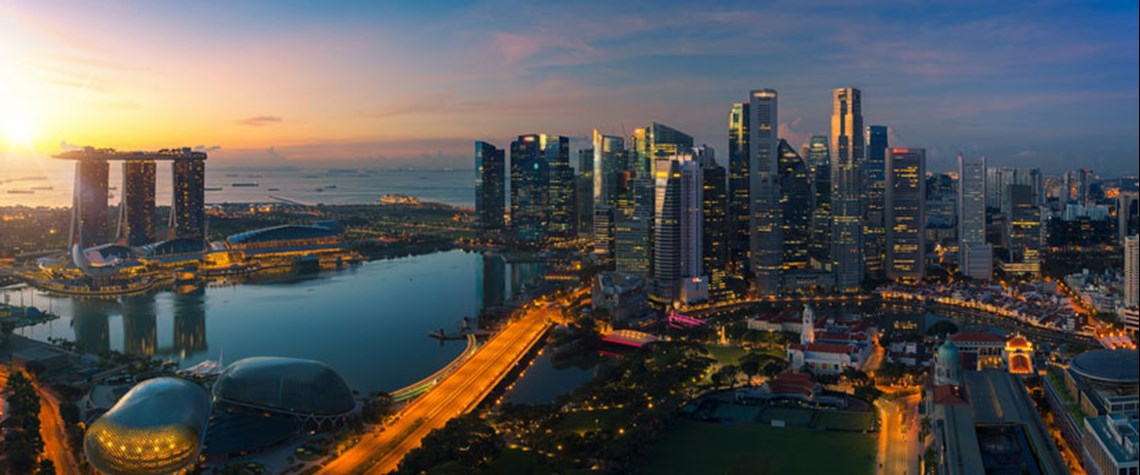
BP will supply Pavilion Energy—a subsidiary of Singapore’s state-owned Temasek—with 800,000t/yr of LNG for ten years from 2024. The long-term sales-and-purchase agreement will see the LNG delivered to Singapore. The partners plan "to co-develop and implement a greenhouse gas (GHG) quantification and reporting methodology” for LNG cargoes “from wellhead to discharge terminal”. Quantifying emissions is the first step towards “a lower carbon future... [and carbon] reduction and offsets for Singapore”, Pavilion Energy CEO Frederic Barnaud says, while BP cites its stated ambition “to be a net zero company by 2050 or sooner”. Pavilion Energy is involved in LNG trading, shipping and storage, as wel

Also in this section
Learning from oil’s supercycle miss
5 December 2025
Mistaken assumptions around an oil bull run that never happened are a warning over the talk of a supply glut
Explainer: What do Russia’s oil giants own overseas?
4 December 2025
Time is running out for Lukoil and Rosneft to divest international assets that will be mostly rendered useless to them when the US sanctions deadline arrives in mid-December
Letter from Saudi Arabia: US-Saudi energy ties enter a new phase
Opinion
3 December 2025
Aramco’s pursuit of $30b in US gas partnerships marks a strategic pivot. The US gains capital and certainty; Saudi Arabia gains access, flexibility and a new export future
Letter from London: Oil’s golden triangle
Opinion
2 December 2025
The interplay between OPEC+, China and the US will define oil markets throughout 2026

Share PDF with colleagues

COPYRIGHT NOTICE: PDF sharing is permitted internally for Petroleum Economist Gold Members only. Usage of this PDF is restricted by <%= If(IsLoggedIn, User.CompanyName, "")%>’s agreement with Petroleum Economist – exceeding the terms of your licence by forwarding outside of the company or placing on any external network is considered a breach of copyright. Such instances are punishable by fines of up to US$1,500 per infringement
Send

Forward article Link

Send
Sign Up For Our Newsletter
Project Data
Maps
Podcasts
Social Links
Featured Video
Home
  • About us
  • Subscribe
  • Reaching your audience
  • PE Store
  • Terms and conditions
  • Contact us
  • Privacy statement
  • Cookies
  • Sitemap
All material subject to strictly enforced copyright laws © 2025 The Petroleum Economist Ltd
Cookie Settings
;

Search


