


Newsletters | Request Trial | Log in | Advertise | Digital Issue   |   Search
  • Upstream
  • Midstream & Downstream
  • Gas & LNG
  • Trading & Markets
  • Corporate & Finance
  • Geopolitics
  • Podcasts
Search
Related Articles
Navigating the next LNG cycle
Eni’s director for global gas and LNG portfolio, Cristian Signoretto, discusses how demand will respond to rising LNG supply, and how the company is expanding its own gas and LNG operations through disciplined, capital-efficient investments
Next wave of floating LNG growth in developing markets
After Europe’s rapid buildout of floating LNG import capacity, Exmar CEO Carl-Antoine Saverys says future growth in floating gas infrastructure will increasingly be driven by developing markets as lower prices, rising energy demand and the need to replace coal unlock new opportunities for unconventional and tailor-made solutions
Colombia races to shore up gas supply
Gas is a central pillar of Colombia’s energy system, but declining production poses a significant challenge, and LNG will be increasingly needed as a stopgap. A recent major offshore gas discovery offers hope, but policy improvements are also required, Camilo Morales, secretary general of Naturgas, the Colombian gas association, tells Petroleum Economist 
How Hormuz chokehold threatens LNG buyers
A potential blockade of the Strait of Hormuz following the escalating US-Iran conflict risks disrupting Qatari LNG exports that underpin global gas markets, exposing Asia and other markets to sharp price spikes, cargo shortages and renewed reliance on dirtier fuels
New Zealand embraces LNG
LNG would serve as a backup supply source as domestic gas declines and the country’s energy system comes under stress during periods of low hydropower output and high energy demand
European gas faces renewed strain after winter drawdowns
Sustained low temperatures have depleted storage levels and exposed the EU’s vulnerability to shocks even as the bloc moves ahead with phasing out all Russian imports
LNG, a strategic safeguard
Europe has transformed into a global LNG demand powerhouse over the last few years, with the fuel continuing to play a key role in safeguarding the continent’s energy security, Carsten Poppinga, chief commercial officer at Uniper, tells Petroleum Economist
A dual-coast LNG strategy
Sempra Infrastructure’s vice president for marketing and commercial development, Carlos de la Vega, outlines progress across the company’s US Gulf Coast and Mexico Pacific Coast LNG portfolio, including construction at Port Arthur LNG, continued strong performance at Cameron LNG and development of ECA LNG
Cheniere’s disciplined expansion
US LNG exporter Cheniere Energy has grown its business rapidly since exporting its first cargo a decade ago. But Chief Commercial Officer Anatol Feygin tells Petroleum Economist that, as in the past, the company’s future expansion plans are anchored by high levels of contracted offtake, supporting predictable returns on investment
The new LNG wave is finally here
Growth in LNG supply will surpass the rise in demand in 2026 for the first time in years, according to Mike Fulwood, senior research fellow at the OIES, but lower prices are likely to encourage fuel switching and could create more demand on a permanent basis
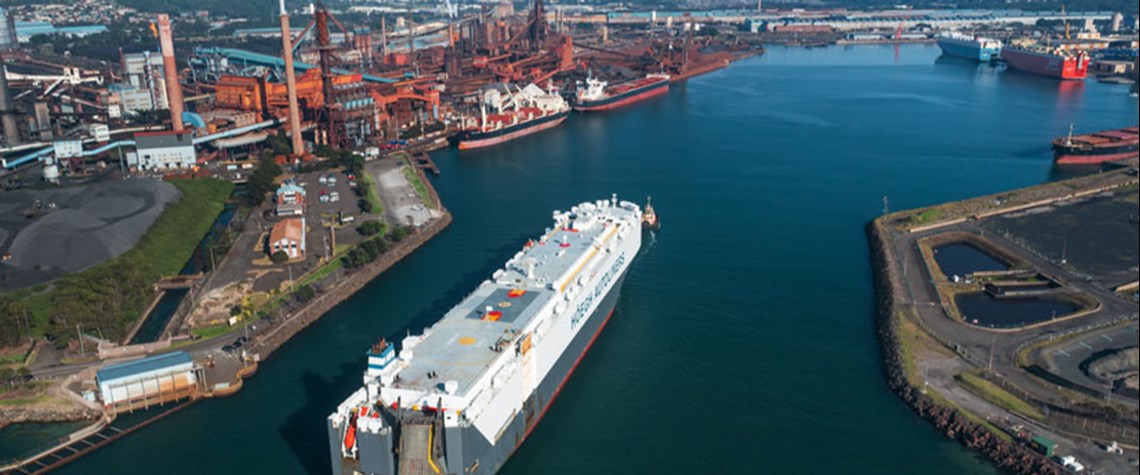
The Port Kembla Gas Terminal will be vital to avoid supply shortfalls
Australia LNG
Andrew Kemp
22 April 2021
Follow @PetroleumEcon
Forward article link
Share PDF with colleagues

Australian gas market poised for ‘transformation’

Timely delivery of new projects will be vital to avoid shortfalls, AEMO says

Australia’s east coast gas market is “on the cusp of transformation”, the Australian Energy Market Operator (AEMO) says in its 2021 Gas Statement of Opportunities. But rapidly declining production flexibility means there is potential for supply shortfalls in coming years unless new projects are delivered on time. Chief among these developments, AEMO says, is the proposed Port Kembla Gas Terminal (PKGT) in New South Wales. Faith in imports The $250mn ($193.5mn) PKGT project, promoted by Australian Industrial Energy (AIE), is largely responsible for AEMO’s more bullish short-term supply forecast. Its timely startup would, according to AEMO calculations, delay an anticipated gas supply shortfal

Also in this section
The diesel crisis
10 March 2026
By shutting the Strait of Hormuz, Iran has cut exports of distillate-rich Middle Eastern crude, jet fuel and diesel, and is holding the energy market hostage
Navigating the next LNG cycle
10 March 2026
Eni’s director for global gas and LNG portfolio, Cristian Signoretto, discusses how demand will respond to rising LNG supply, and how the company is expanding its own gas and LNG operations through disciplined, capital-efficient investments
OPEC+ boosted production before crisis
9 March 2026
Petroleum Economist analysis sees increases in output from Saudi Arabia, Venezuela and Kazakhstan among others before region’s murky descent
Energy dominance as diplomatic leverage
9 March 2026
Energy sanctions are becoming an increasingly prominent tool of US foreign policy, with the country’s growth in oil and gas production allowing it to impose pressure on rivals without jeopardising its own energy security or that of its allies, argues Matthew McManus, a visiting fellow at the National Center for Energy Analytics

Share PDF with colleagues

COPYRIGHT NOTICE: PDF sharing is permitted internally for Petroleum Economist Gold Members only. Usage of this PDF is restricted by <%= If(IsLoggedIn, User.CompanyName, "")%>’s agreement with Petroleum Economist – exceeding the terms of your licence by forwarding outside of the company or placing on any external network is considered a breach of copyright. Such instances are punishable by fines of up to US$1,500 per infringement
Send

Forward article Link

Send
Sign Up For Our Newsletter
Project Data
Maps
Podcasts
Social Links
Featured Video
Home
  • About us
  • Subscribe
  • Reaching your audience
  • PE Store
  • Terms and conditions
  • Contact us
  • Privacy statement
  • Cookies
  • Sitemap
All material subject to strictly enforced copyright laws © 2025 The Petroleum Economist Ltd
Cookie Settings
;

Search


