


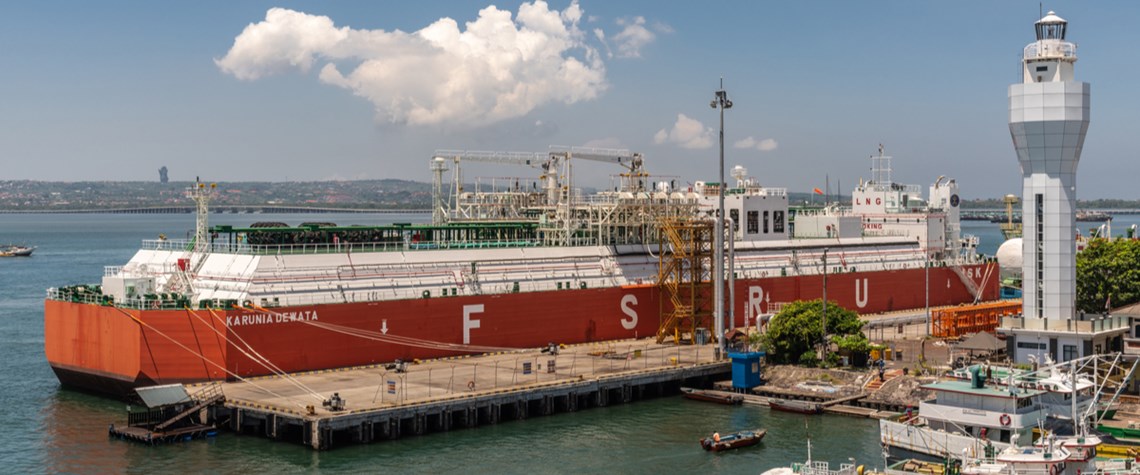
FSRUs helping LNG to penetrate emerging markets
Floating storage and regasification units are allowing economies to access the lower-carbon fuel source without expensive infrastructure
Demand for floating storage and regasification units (FSRUs) is expanding rapidly, especially in developing Asian economies, despite legal and regulatory challenges, a panel of experts on the Emea leg of the Petroleum Economist LNG to Power forum series agreed last week. “There is a huge demand for floating regas for many different reasons, [including] the development costs and the technology they provide,” says Aziz Kassim, vice president, development, Middle East, at Excelerate Energy. “They enable a lot of countries to start quickly to import LNG and take advantage of the lower prices, with the abundance of LNG around the world,” he says, noting plentiful exports from the US, Australia an

Also in this section
1 April 2026
Golden Pass’s startup offers QatarEnergy a timely boost but may also force a difficult choice between honouring disrupted contracts and capitalising on soaring spot LNG prices
1 April 2026
It is not a case of if or when, but the length and magnitude of economic damage from elevated oil prices
1 April 2026
The US-Iran conflict demonstrates the need for diversification in several senses of the word. It also exposes the limits of Washington applying pressure on major oil and gas producers it considers geopolitical adversaries
31 March 2026
Disappointing results in its bidding round are a reality check for Libya, and global exploration generally



